Welcome back to the blog! This is an interview from my podcast, “The Unstruggle Mindset Podcast”. In this episode, I have invited Lauren Crooks onto the show to discuss her limitations and struggles living with Gastroparesis. You can watch the interview here! While you are there, subscribe to my channel for more great, informative content!
Ryan: So we will get started. So I’ve been doing a lot of research since I’ve been following your journey about the gastro-paresis and I haven’t been able to find a whole lot about it. So that’s why I wanted to get you on the show to kind of because there’s really no expert like somebody that has to live through the shit. So for those that are watching, could you tell a little bit about yourself, explain who you are, and then a little bit about what gastroparesis is?
Lauren Crooks: Okay. So I’m Lauren and I am 37. I’ve been suffering with extreme gastric issues for probably about six years. And it took me about, I would say about two years to get the proper diagnosis. Every doctor that I was going to was saying that it was just anxiety and that it was all in my head or that it was just IBS. So they started treating me for IBS. And once they were treating me for IBS, which the main treatment for that is they just tell you to pound a lot of fiber. Help yourself go to the bathroom, things like that. So for some reason I kept getting sicker. I couldn’t figure out why an organ. And they just kept saying, well, it must be anxiety. It must be in your head because there’s nothing wrong with you. We don’t see anything wrong.
Your blood works completely normal. So they were like, “Well, it must be in your head.” So finally I was like, “Well, okay. Well maybe it is.” I couldn’t explain it. So I actually went to a psychologist and talked to him several times and he looked at me and he was like, “Lauren, I do think you have anxiety and this and that.” And he was like, “But you’re sick. This is not anything that I can help you with.”
Ryan: Right.
Lauren: So I found a very awesome primary care doctor who I cannot say enough amazing things about. I went straight to him and told him all my symptoms. And I was like, “I’ve been researching a lot. I feel like there’s definitely something wrong.” Any wild theory that I threw at him. He was like, “All right, let’s test it. Let’s do it.” He was like, “I got the best gastric doctor in the world.” He was like, “I’ll send you to her.” I went to see her first visit. I finally got my official diagnosis.
Ryan: So, it took you two years to get diagnosed?
Lauren: I would say roughly, yeah.
Ryan: Wow. So upon your journey, I know you said you had a really good doctor, but upon your journey, since you’ve had the actual diagnosis, how would you say that your medical treatment has been as far as nipping it in the bud?
Lauren: Well, my doctor that diagnosed me with, she is a fricking genius. This whole disease is all she studies. She works at a Motility clinic here and people come from all over the east coast to come see her. Because the next closest GI Motility clinic that deals with this kind of stuff is in Cleveland. And then the next one is in Mayo clinic. So, that’s pretty far. So people come from all over the world or all over the United States over here to see her. So when I was in there, getting one of my tests done to rule out or diagnose gastro-paresis, I was sitting in there and there was like 10 people in the waiting room. And there was a girl in there that was from New York. There was a girl from Indiana. There was a girl from three hours down in Kentucky.
So she sees everybody from so far. But the problem that I have with her is she has so many patients, because nobody understands this besides them. So I feel like our quality of care is kind of lacks a little bit. Because she doesn’t have enough time to dedicate to her patients as your typical doctor would.
Ryan: Right.
Lauren: But I mean, she does have a portal and I can email her right now. I mean, it’s 10:15. I can email her right now. And if she didn’t message me back within the next two hours, she would when she got up at five in the morning.
Ryan: Wow.
Lauren: So anytime I want to try like a new med or anything, she’s never had a problem trying anything.
Ryan: That’s good. So what would you say are your biggest limitations? And I know I’ve been following your post on Facebook and watching how things progress and it looks like pure hell. So I just wanted to know from your standpoint, what are your greatest limitations struggling with this?
Lauren: Eating is the worst. People don’t realize how much your life actually revolves around eating. And you don’t realize the pleasure that you have when you actually eat food. I forgot what it felt like to be hungry for like two years. I lived off of probably about eight ounces of water and all I would eat would be spoonfuls of peanut butter throughout the day. That was all I could live off of for a while. So I completely forgot what it felt like to be hungry. Now that my treatments worked a little bit and I can eat again, I’m like, damn. It feels pretty good. There’s a euphoria that you get that people don’t realize that people take that for granted. And I think work is pretty difficult. My social life is pretty difficult because not only can we not eat and food makes us sick, but we also lack the ability to absorb our nutrients from food and vitamins.
So, I don’t have any B12 whatsoever. My vitamin D, my potassium crashed, my calcium crashed. And then now I’ve just found out I’m severely anemic and I’m going to have to be doing infusion soon. So I don’t really have a lot of energy to do anything. So for me to go to work, I pretty much have to go to work and come home immediately get in bed and stay in bed until I have to get up the next day.
Ryan: Oh my gosh.
Lauren: So I really don’t have much of a social life. I used to go to concerts all the time. And if I were to want to go to a concert and really rock out and have a really good time, I would have to prepare myself for a couple of days prior. And then I would probably pay for about a day or two afterwards and wouldn’t be able to get out of bed. And that’s a misconception that I hate about this disease is because, people were like, “Oh, she was out in Washington at a concert last night. She’s fine. She’s not really that sick.” But they don’t see the two days that I’m in my bed crying like, “Oh my God, why did I do this to myself?”
Ryan: Right. Well, I mean, I can understand where you would have to make that sacrifice just to have something that feels kind of normal in your life because you can’t just sit and waste away and just do nothing in just like, “Well, this is my life then.”
Lauren: I’ve never been that kind of person. I’ve always been kind of go, go, go. I just want to be out doing something all the time. And once I wasn’t really able to do that, I feel like the mental aspect of this disease is just as bad if not worse at times.
Ryan: Right. And that kind of segues kind of into my next question, because my podcast, I focus a lot about mindset and about positivity and things like that. And I know that from watching your Facebook posts and things like that, I know I’ve seen your flares where you’ve had the severe bloating and things like that, and…
Lauren: I’ve got one now!
Ryan: I could imagine physically, it’s got to be hell on you. But mentally, from a mindset, you share the memory from your Facebook of you walking down the street with the IV pole dancing, and you were talking about how you wouldn’t let the disease break your personality. So my question to you is how have you been able to stay yourself and separate yourself from being a victim of the disease? You keep your personality. You seem to be kind of still the upbeat kind of happy all the time, kind of deal.
Lauren: I’m really not. I try to be that way more so for like other people. It’s really hard not to lose yourself in that. Because I’m still kind of, I feel like I’m still new to it compared to a lot of people that I do know that have these issues. I do relatively well on that aspect, they would say. But if you knew me personally, you wouldn’t think that I did. It’s very hard to separate yourself from the disease because I have to plan my entire day around my symptoms and my disease and what I’m going to do. As soon as I wake up, I have to take medicine, then I’m like, “All right, what does my stomach… What does it feel like I can tolerate that I can eat today.” So then I eat and then I’m like, “All right, am I going to have to spend an hour in the bathroom before I go somewhere?”
How bloated am I? What size clothes do I wear today?” And then it’s like, “Okay.” And then by that time, it’s like, I’ve eaten. So then I’m like, “Well, now I’ve got to take more meds because now I got to combat those symptoms that just happened.” So I mean, it’s really extremely exhausting. It’s like an all day thing. I try to make light of the situations and laugh. Like when I get a big bloat, I’m like, “Oh, let’s name the bloat. Let’s name my baby.” I try to do something stupid or funny, like that. But the main thing that keeps me saying really is my fiance is great about it because he’s a very, very positive person. We’re kind of a polar opposites in that way. Because I’m kind of, I have a lot of negativity. So besides him and my animals, if I didn’t have either one of those, I don’t know where I’d be right now, to be honest with you.
Ryan: So I know you just mentioned that you actually… Do you actually have to keep different size clothes depending on the day?
Lauren: Yeah. I have about three to four different sized jeans that I can wear depending on the day. Some days I can’t wear jeans. Some days I have to wear sweat pants because my jeans just aren’t going to button depending on how bad my bloat is.
Ryan: Oh my goodness. Now I was looking… Like I said, I’ve done research and I’ve found a bunch of clinical trials, but I’ve found absolutely no results for those clinical trials. But I did find that, a lot of pain meds that they would normally give for stuff like this can actually make the symptoms of gastroparesis worse?
Lauren: That’s because a lot of us suffer with extreme constipation. I mean, you can go either way. Like one person, we may have the same exact symptoms, but one person have extreme diarrhea all the time, which I had a friend that’s like that. Or one person can never go to the bathroom at all. And that’s where the problem for pain management comes in for people like me, because those calls extreme constipation and a lot of drugs like that slow your motility down even worse. So if we’re already not digesting our food, it’s not going to.
Ryan: Right. Now you said your fiancé is there with you. So I just had a kind of question I wanted to kind of point his way. Of course, Lauren, for you it’s difficult living with this every single day. And I’m so glad that you have a good support network, but Josh for you, how has it been for you being the person from the outside, looking in, watching her go through these struggles and how has the disease affected your relationship?
Josh: It can be frustrating because you’re pretty much helpless in the situation. There’s not much I can do. So I do try to be just like a beacon of positivity, maybe to an annoying extent sometimes. But no, that’s really all I can do because I just feel very helpless sometimes. And that’s really… That’s an awful feeling. The person you love and you’re just, there’s really nothing you can do.
Ryan: Right. I know I’ve seen a… I believe, I think I seen a post a couple of months ago. You all tried to go on vacation and Lauren you actually ended up stuck up in the room, sick from everything and wasn’t able to enjoy anything.
Lauren: Yeah. We were going to go to magic kingdom that day actually, and my body had other plans.
Ryan: So how do you guys stay strong in your relationship with everything going on? I’m sure Josh, you had to go to work and then Lauren, you had to go to work and then when you’re at home together, is it always laying in bed and things like that? Or do you have the good days and the bad days or?
Josh: There’s definitely good days and bad days without a doubt. We just push through the bad days and we just enjoy the good days to the fullest extent that we possibly can.
Ryan: That’s good. All right. Awesome. So let me see here. I think that’s all the questions that I had. So Lauren, for all the people that are tuning in and they have no idea, how would you explain gastro-paresis to the average Joe?
Lauren: Have you ever had a really bad stomach bug?
Ryan: Actually I did like two weeks ago!
Lauren: Well imagine that being 24/7. There’s not a day or a moment that I don’t feel some sort of discomfort in sick or in some sort of pain. People think that just because like, “Oh, she ate a little bit today. She’s not feeling bad.” It’s like, no. I feel bad every time I eat certain things that are just worse than others. It’s just hard. I just wish people understood that just because I don’t physically look sick, that it must not be real. A lot of people were like, “Oh, she’s a hypochondriac because this is rare. Nobody’s heard of it. It’s just another stomach ache.” And I’m really tired of that misconception that it’s just another stomach ache. Because it’s not. I’ll show you that this is what I live with every day.
Ryan: Oh my goodness.
Lauren: Yeah. And this happened before I even ate anything. I just ate a little bit ago. And actually I feel like I’m going to puke already since just being on this call. So…
Ryan: Oh my gosh.
Lauren: I feel like I’m going to blow. Or I feel like I’m going to pop pretty much 24/7. And it pushes everything up in your throat. So sometimes I’m scared even to bend over to tie my shoe. Because I’m like, “Oh, everything’s going to come flying out.” So…
Oh my gosh.
Lauren: It’s not time. And it’s not just the stomach. That’s the biggest thing that I want people to understand is just because you don’t look sick doesn’t mean… Invisible doesn’t mean it’s not real.
Ryan: Right. Now I don’t want to bring up the negative or anything. But do you have those people that say that you just do it for attention or something like that?
Lauren: I’ve had those people. Yeah. I’ve even had family members saying, “Oh, well.” I’ve had some family members say some shitty things to me too. Saying that, it’s just, well, I need to eat. “She needs to eat more or she’s too skinny. Or she needs to just do this. This is what my neighbor does.” I hate when people say, “Oh, well just do this. This is what works.” Because that’s the horrible thing about this disease is that it’s so different for everybody. So it makes it hard to find a cure because there’s no common denominator with anybody. There’s so many things that cause it. With me, they’re not a hundred percent sure what caused it. They think that I have this rare antibody issues. So that’s why I’m on this treatment every week or every other week now. But that’s just the thing that I hate the most. People were like, “Oh, she looks good. She’s pretty, she’s fine. She’s she’s not sick.”
Ryan: Right. And then I seen that…
Lauren: No, I’m glad I don’t look like I feel because it, I would probably look like a skeleton.
Ryan: Right. Now I’ve seen that you actually had to have a port put in for medication.
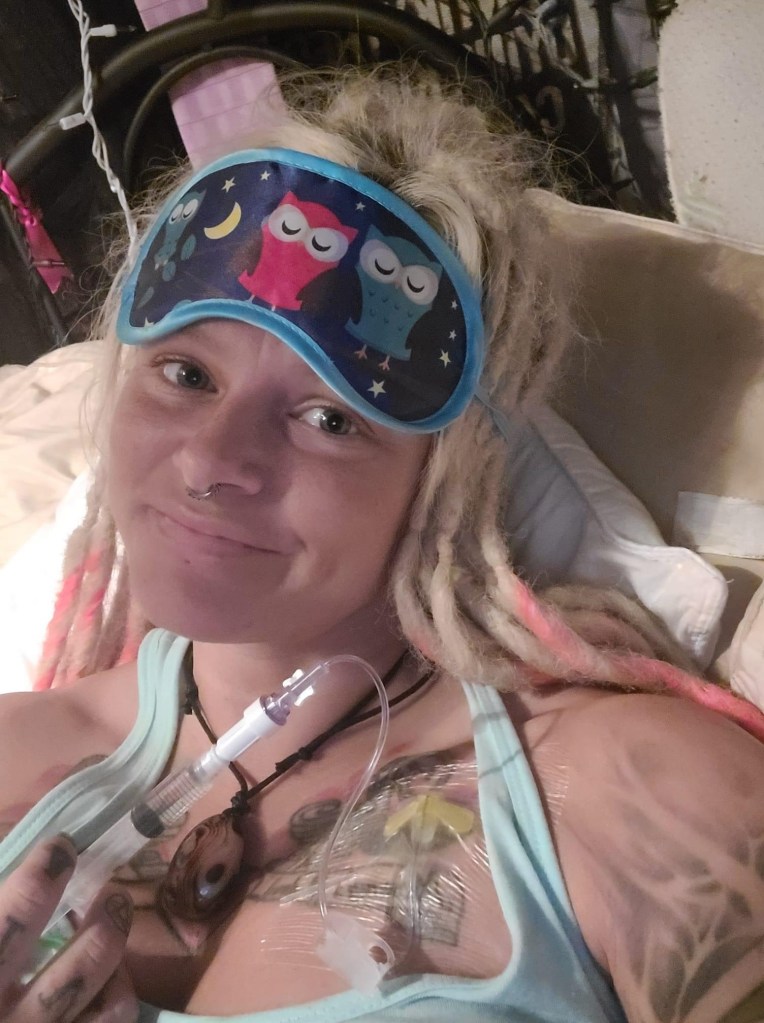
Lauren: Yeah. That was because the main reason for that was because I can’t drink water. Honestly, water is the thing that makes us the most sick for some reason. So I have to give myself a liter of fluids every day. And when I don’t give myself those fluids, I can definitely tell a huge difference. My doctors said that I was so dehydrated. I was on the verge of probably having a heart attack and possibly dying from it. So I’m very glad that my team was very quick to get all the ball rolling on the fluids and all that stuff. Because this time last year, I honestly, it’s kind of scary to think of where I would be right now if I kept going the way it was this time last year.
Ryan: Yeah. So with everything going on in your life, and I know you just got some disturbing news yesterday with your insurance company and things like that. So moving forward, what are your hopes for the future for gastroparesis as a whole?
Lauren: I really hope that we can find more treatment options for people. I really hope to spread more awareness. That’s why I’m always so raw and open. I’m an open book. I have no problem telling anybody, the worst day I’ve ever had, because I feel like the only reason that people would ever find a cure is if they knew how awful it actually is. And if people just keep thinking, “Oh, she’s just got a stomach ache. She’s just bloated.” People aren’t going to see it for the severity that it is. But there’s a lot of us that are dying and I’ve known several people just in the few short years I’ve been diagnosed that I got close with it have already passed away from it. So it can be deadly. So… And there’s no cure. Yeah. It is a progressive illness also. So some people will never progress. One in three people can get better.
Ryan: Right.
Lauren: Unfortunately I’m not one of those three.
Ryan: Well, I mean, you’re doing the best you can do. I mean, you’re one tough ass chick. You go through everything and with everything going on, I know locally in Louisville people will still remember when you spoke out against Tim Stark and wildlife In Need. So you’re still out there taking charge.
Lauren: Oh, Tim. Fuck him. Yes. I will forever say that when I hear his name.
There [crosstalk 00:20:02] which is really funny. Those people actually attacked me for my health and was saying that I was making everything up and I just wanted attention. Some of those people were actually calling, trying to call my doctors and say that I was faking this and trying to get me off my treatment and telling them all kinds of fucking crazy things. So I’ve been pretty attacked by that group of people. So…
Ryan: Oh my gosh.
Lauren: But you know what? The animals are safe. So I did my job and-
Ryan: Exactly.
All those awesome women that stood up with me to do it. It was worth every fucking second of it.
Ryan: Awesome.
Lauren: It’s funny. He’s always like, “Oh, slit her throat. I’ll kill her.” I’m like, “Well, good news, bro. I’m dying anyway. Put me out of my misery. It doesn’t affect me.” He just makes me laugh. He’s a fucking train wreck of a person.
Ryan: Well, I thank you so much for your time, Lauren and I hope this podcast can get out and get heard and we can get some kind of awareness going around. And thank you for just taking your time and what you do to try to make the world a better place and try to bring some kind of awareness for other people, not just yourself.
Lauren: I feel like if it can help one person, if I can help one person, then my job is successful.
Ryan: Awesome. All right. Well thank you so much for your time. And I hope… I want to say, I hope everything gets better, but it’s one of them things that I hope your treatment goes well, and I hope your insurance company pulls their head out of their ass.
Lauren: Yeah, that’d be great.
Ryan: All right. Well thank you Josh for sticking in with us and thank you guys so much. See you guys later.
Josh: All right. Thank you.
 Ryan Glenn